Happy Holly: A Playful Typeface for Festive Branding
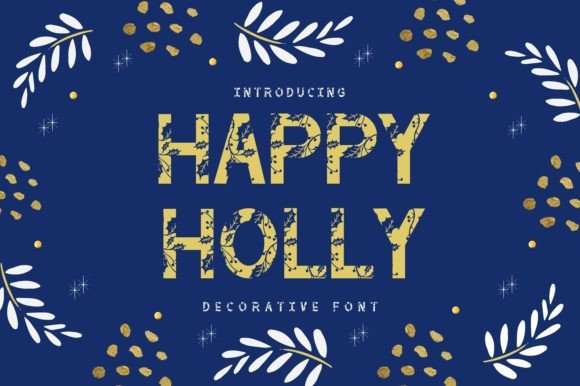
I was working on a branding project for a small seasonal café, and I needed something that felt warm, inviting, and just a little bit whimsical. The client wanted their brand to reflect the joy of the holidays without being too over-the-top. That’s when I came across Happy Holly, a cute Christmas decorative font that immediately caught my eye.
Happy Holly has this charming hand-drawn quality with soft curves and playful details that make it feel like it was crafted with care. It’s not just a font—it’s an experience. The personality of the typeface is light-hearted and authentic, which made me think it would be perfect for the café’s holiday-themed branding.
Testing Happy Holly in Real Design Scenarios
I started by placing Happy Holly on a logo draft. The initial mockup had a simple circle with the café’s name inside. When I applied Happy Holly, the whole thing transformed. It brought a sense of fun and warmth that matched the client’s vision perfectly. I could see how this font could work on everything from signage to packaging.
Next, I tested it on a menu mockup. I used it for the header and paired it with a clean sans-serif font for the body text. The contrast worked well—the playful display font drew attention, while the simpler font ensured readability. This kind of balance is essential in any brand identity, especially when using a decorative typeface like Happy Holly.
I also tried it on social media graphics. Using Happy Holly for short-form text, like promotional posts or event announcements, gave the content a festive touch without overwhelming the viewer. It felt like a natural fit for holiday promotions, and the audience seemed to respond positively to the visual appeal.
Where Happy Holly Shines in Branding Projects
Happy Holly isn’t just limited to holiday projects. Its versatility makes it ideal for a range of applications:
- Logo design: Works best as a display font, adding character to logos for creative businesses, boutiques, or seasonal brands.
- Packaging design: Perfect for product labels, gift boxes, or custom merchandise where a touch of playfulness is desired.
- Social media graphics: Great for short-form text, captions, or holiday campaigns that need a cheerful aesthetic.
- Editorial design: Can be used in blog headers, magazine spreads, or website banners to add a festive tone.
- Printed marketing materials: Ideal for flyers, posters, or shop signs that want to stand out with a unique visual style.
One thing I noticed during testing was how well Happy Holly performed on different surfaces. Whether it was a glossy label or a matte business card, the font retained its charm without losing clarity. It’s important to test any decorative font in real-world conditions before committing to it for a full brand system.
Font Pairing and Practical Tips
When pairing Happy Holly with other fonts, I found that combining it with a modern sans-serif font created a nice contrast. For example, using Happy Holly for headlines and a clean sans-serif for body copy helped maintain visual hierarchy while keeping the design cohesive.
Another consideration is ensuring that the font works across different platforms and file formats. I checked the available styles and found that it includes several variations, making it easy to adapt for both digital and print use. Also, verifying commercial font licensing was an important step, especially since the café would be using it on branded merchandise and packaging.
For clients who are new to typography, I always recommend testing the font in various contexts before finalizing a brand identity. This helps ensure that the font aligns with the brand’s voice and doesn’t compromise readability in critical areas like menus or informational content.
Happy Holly is a great example of how a decorative font can elevate a brand without feeling forced. It adds personality and emotional appeal, which are key factors in creating a memorable brand identity. As long as it’s used thoughtfully and paired with complementary typefaces, it can become a valuable asset in any designer’s toolkit.